Key takeaways
- 1Breathwork works because breathing is both automatic and controllable, making it a practical bridge into nervous-system state.
- 2A breathing pattern is a repeatable recipe; box breathing, coherence, extended exhales, and physiological sighs do different jobs.
- 3A beginner baseline comes before training because it helps choose a realistic pace instead of guessing.
- 4CO₂ tolerance is the main first baseline in Auralize; BOLT is a supported alternative that also probes CO₂-related air-hunger control.
- 5The best first sequence is simple: measure once, practice box breathing, keep the breath voluntary, then adjust from the result.
Part 1 · The map
Breathwork, in plain English
Breathwork means using the breath on purpose. Breathing usually runs automatically in the background. In breathwork, you briefly make it intentional: you choose how fast to breathe, whether to breathe through the nose or mouth, how large each breath should be, and whether to include short pauses.
That is the important idea. The nervous system used to feel like a closed automatic system: heart rate, arousal, muscle tension, and stress chemistry seemed like things you could notice but not directly touch. Breathing is the exception because it belongs to both worlds. It runs automatically when you stop paying attention, but you can also control it on command.
Breathwork uses that overlap. It is not a magic remote control for the body, but it is a real voluntary handle on state. By changing the breath, you can send the body a different signal and practice how the mind responds to that signal.
The goal is not to breathe in a special way all day. The goal is to use a specific pattern for a specific job: calm down, become alert, focus, recover after effort, prepare for sleep, or learn to stay relaxed when the urge to breathe rises.
What a “breathing pattern” means
A breathing pattern is just a repeatable recipe. Box breathing uses four equal steps: inhale, hold, exhale, hold. Coherence breathing uses a slow even rhythm. Extended-exhale breathing makes the exhale longer than the inhale. A physiological sigh uses a second small inhale before a long release.
Those patterns are not interchangeable. Box breathing teaches structure and tolerance around pauses. Coherence breathing is better for a smooth, sustainable rhythm. Extended exhales are useful when you want a simple downshift. Physiological sighs are brief resets, not a full training plan.
The four controls every beginner should know
Most breathwork changes one or more of four controls. Timing means how long you inhale, exhale, or pause. Route means nose breathing versus mouth breathing. Depth means quiet everyday breathing versus larger active breaths. Attention means noticing the breath as a body signal instead of letting it stay invisible.
Those controls matter because the breath touches several systems at once. It changes respiratory drive, which is the body's pressure to take the next breath. It also changes heart-rate rhythm, muscle tone, attention, and how the brain interprets internal sensation. That is why the same person may need one pattern for sleep, another for a presentation, and another for athletic pacing.
Use the right tool for the right job
Good breathwork depends on context. More intense breathing is not automatically better, and one pattern will not fit every state. A practice that helps before a workout may be a bad fit in bed. A technique that helps focus may feel too effortful during panic.
A good system gives each tool a clear job. Slow breathing can help settle heart-rate rhythm during practice. CO₂ tolerance work builds comfort and control around mild air hunger. Physiological sighs give you a short reset when arousal spikes. In Auralize, those tools support training decisions while medical care, sleep treatment, asthma management, and therapy stay in their proper lane.
Part 2 · The baseline
The first thing to measure
A baseline is a starting measurement. It answers a practical question: “Where should I begin today?” It does not diagnose you, rate your health, or prove discipline. It helps the app choose a pace that is challenging enough to teach you something without pushing you into strain.
What CO₂ tolerance means
CO₂ is carbon dioxide, the gas you exhale. Your body constantly tracks it. When CO₂ rises enough, the brain sends a stronger signal to breathe. That “I need to breathe” sensation is called air hunger. CO₂ tolerance is the practical ability to stay calm and coordinated as that sensation begins.
This matters because many beginner practices eventually meet the same signal. In box breathing, it may appear during the empty-lung hold. In a long exhale, it may appear near the end of the release. During exercise, it appears when effort rises and the body wants faster breathing.
Why Auralize starts there
Auralize uses the CO₂ tolerance test as the default first baseline because it maps directly to the skills the app trains: slow exhale, calm pacing, and controlled response to rising air hunger. The test gives the app enough information to suggest a conservative starting pace instead of asking every person to force the same count.
Part 3 · The practice path
What to practice first
Once you have a baseline, the next step should be simple. Do not stack five methods together. Pick one practice, repeat it enough to understand how it feels, then add a second pattern when the first one is stable.
Start with box breathing
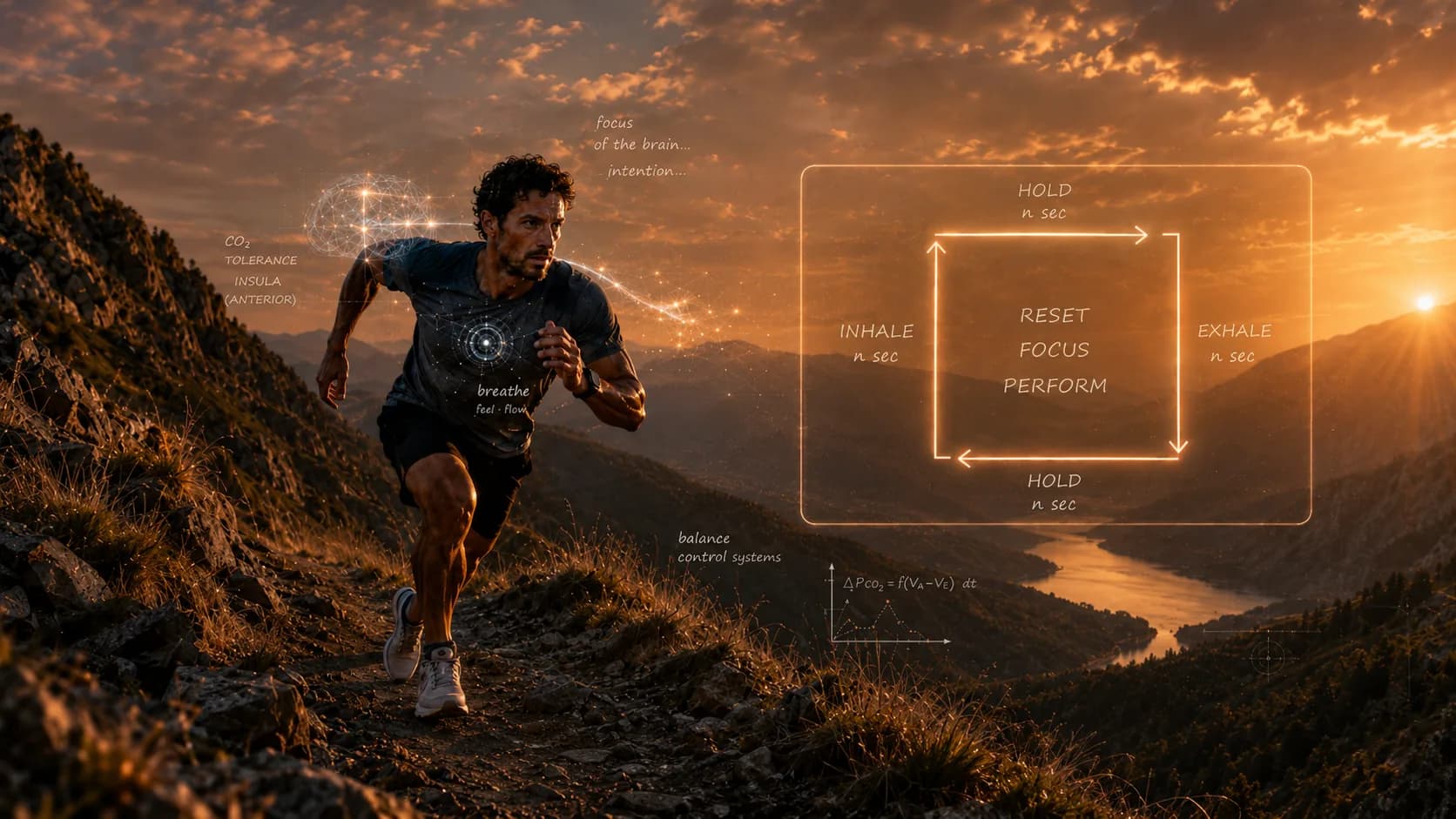
Box breathing is a structured pattern with four equal sides: inhale, hold with the lungs full, exhale, then hold with the lungs empty. It is the right first structured practice for many beginners because the count is memorable, the structure is obvious, and the empty hold gives immediate feedback about whether the pace is too aggressive.
The point is not to prove you can hold your breath. The point is to make a clean square several times in a row while staying relaxed. If the next inhale becomes a gasp, the box is too long. Shorten it, keep the breath quiet, and build from repeatability.
Practice in Auralize
Choose your first box-breathing route
Start with one guided session if you want to feel the pattern now. Use the program when you want the app to scale box breathing from your CO₂ baseline.
Control
Deep Focus
Box breathing quick shift
Quick shift · 10 minutes
Try a Box Breathing Shift
Start quick shift
Program · CO₂ baseline
CO₂ Capacity Builder
Open program
Then build a coherence habit
Coherence breathing is a slow, even rhythm often practiced around five to six breaths per minute. Once box breathing feels familiar, coherence becomes the daily maintenance rhythm. It is less about handling air hunger and more about practicing a smooth, sustainable pace for ten to fifteen minutes.
Part 4 · First steps
How to start safely
A useful start is small and repeatable. Take one baseline, use it to choose a conservative pace, then practice one pattern long enough to notice what changes. If you try to learn every technique on day one, the signal gets muddy and you will not know what helped.
A simple first sequence
Start with the CO₂ tolerance test. Then run a short box-breathing session at a pace that feels clean, not heroic. After a few sessions, repeat the baseline or move into coherence breathing if your goal is a steadier daily rhythm rather than tolerance work.
Guardrails that actually matter
Start seated, sober, and away from water, driving, heights, or machinery. Use short sessions. Keep the breath voluntary. Stop for dizziness, chest discomfort, visual changes, severe breathlessness, numbness, or distress. If you have meaningful heart, lung, neurological, or pregnancy considerations, get individualized guidance before using holds or intense breathing.
What progress should feel like
The right beginner signal is boringly useful: you finish calmer, clearer, or more aware than you started, and your normal breathing returns easily. Over time, the same pattern should feel smoother before it becomes longer. Build repeatability first; intensity can wait.