Key takeaways
- 1CO₂ tolerance is the buffer between the urge to breathe and losing composure — gasping, bracing, or reacting instead of staying steady.
- 2That urge comes from rising CO₂, not falling oxygen — you can feel it long before oxygen is actually a concern.
- 3It matters most in real situations: a tense meeting, a hard conversation, a sprint effort — not the breathing exercise itself.
- 4Training is repeated, controlled exposure to mild air hunger, using breathing exercises as the tool, not the goal.
- 5Auralize measures it with a controlled-exhale test and doses training from that score.
What CO₂ tolerance means, and why it matters
CO₂ tolerance is the ability to stay calm, coordinated, and voluntary as the urge to breathe rises. It is not a contest for who can suffer longest — it is the practical skill of noticing air hunger without letting it turn into panic, bracing, or gasping.
That skill rarely gets tested during a breathing exercise. It shows up as chest breathing before a meeting, a sigh spiral mid-argument, restlessness before sleep, or losing cadence and gasping early into a hard effort. Breathing exercises are simply the safest place to practice the response — the payoff is composure in situations that have nothing to do with breathing exercises at all.
Busy life
The skill transfers
Practice
A safe place to rehearse it
Athletes
Composure under load
Baseline
A smarter starting point
Why CO₂ — not oxygen — creates air hunger
Your breathing system is not waiting for oxygen to run out. In an ordinary breath hold or slow-breathing pause, oxygen stays adequate while CO₂ climbs, and rising CO₂ is what triggers the urge to breathe. That is why the urge can feel urgent long before oxygen is actually a concern — the signal is a chemistry alarm, not a fuel gauge. How the chemoreceptor system drives it is its own topic.
Overbreathing works against this skill
Breathing more than the moment requires drives baseline CO₂ down, so the next rise feels louder than it should. That shows up as shallow chest breathing before a hard conversation, a tight chest before a presentation, or an athlete chasing air before the effort demands it — the exact moments this training targets.
What changes when you train it
The same signal starts producing less alarm, so you keep functioning instead of freezing or overreacting. In practice that looks like staying present through a hard conversation instead of sighing through it, holding pace when effort spikes instead of panicking, or settling back to sleep instead of lying there wired. The change is less about breath mechanics and more about how accurately you read a normal physical signal.
Can it be trained?
Yes. Breath-hold and reduced-breathing practice improve performance on similar tasks, and breathing-retraining research shows people can learn to shift respiratory rate and their response to breath-related sensations. The dose should feel trainable, not heroic: if a session ends in panic breathing, dizziness, or recovery gasps, it was too hard. A good session ends with the sense that the signal rose, you stayed organized, and ordinary breathing returned quickly.
How Auralize trains it
Auralize starts with a controlled-exhale CO₂ tolerance test: a calm warm-up, then one slow, soft exhale, timed. It is not a blood-gas lab — its value is a repeatable score that sets a conservative starting point.
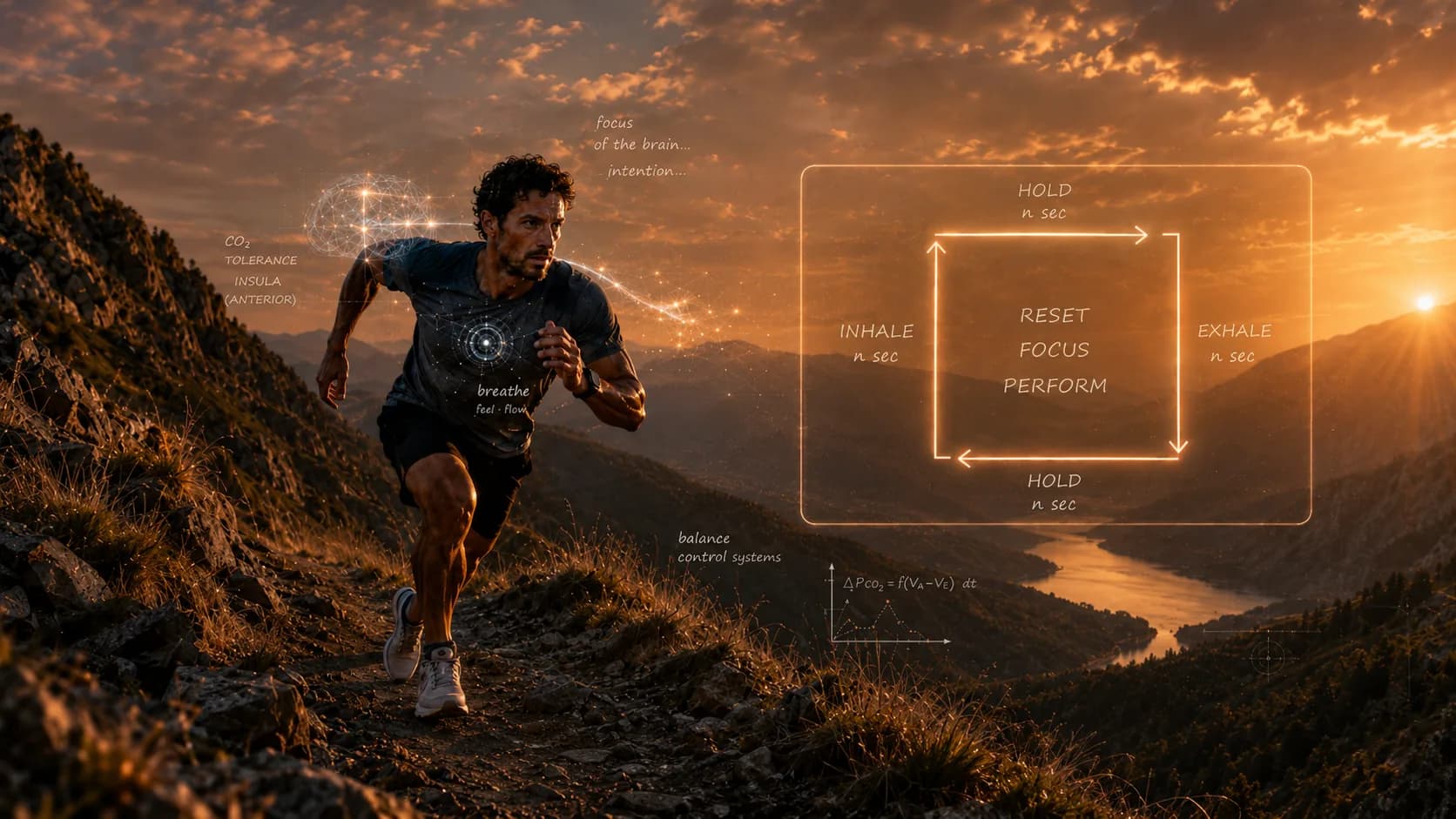
From there, box breathing is the training tool: it doses mild air hunger in a controlled, repeatable form, and the count adjusts to your baseline, shorter if air hunger arrives quickly and longer as it stays smooth. (Full technique guidance covers the mechanics.) The target is comfort and quick recovery, not a bigger number — confirmed by retesting after a consistent block of practice, not daily.
Safety
Keep CO₂ tolerance training seated, controlled, and voluntary. Never pair breath holds or deliberate hyperventilation with water, driving, heights, or machinery. Stop for dizziness, confusion, visual changes, chest discomfort, severe breathlessness, or distress. If breathing symptoms are new, severe, or medically complicated, treat that as a reason to get care, not a score to train.