Key takeaways
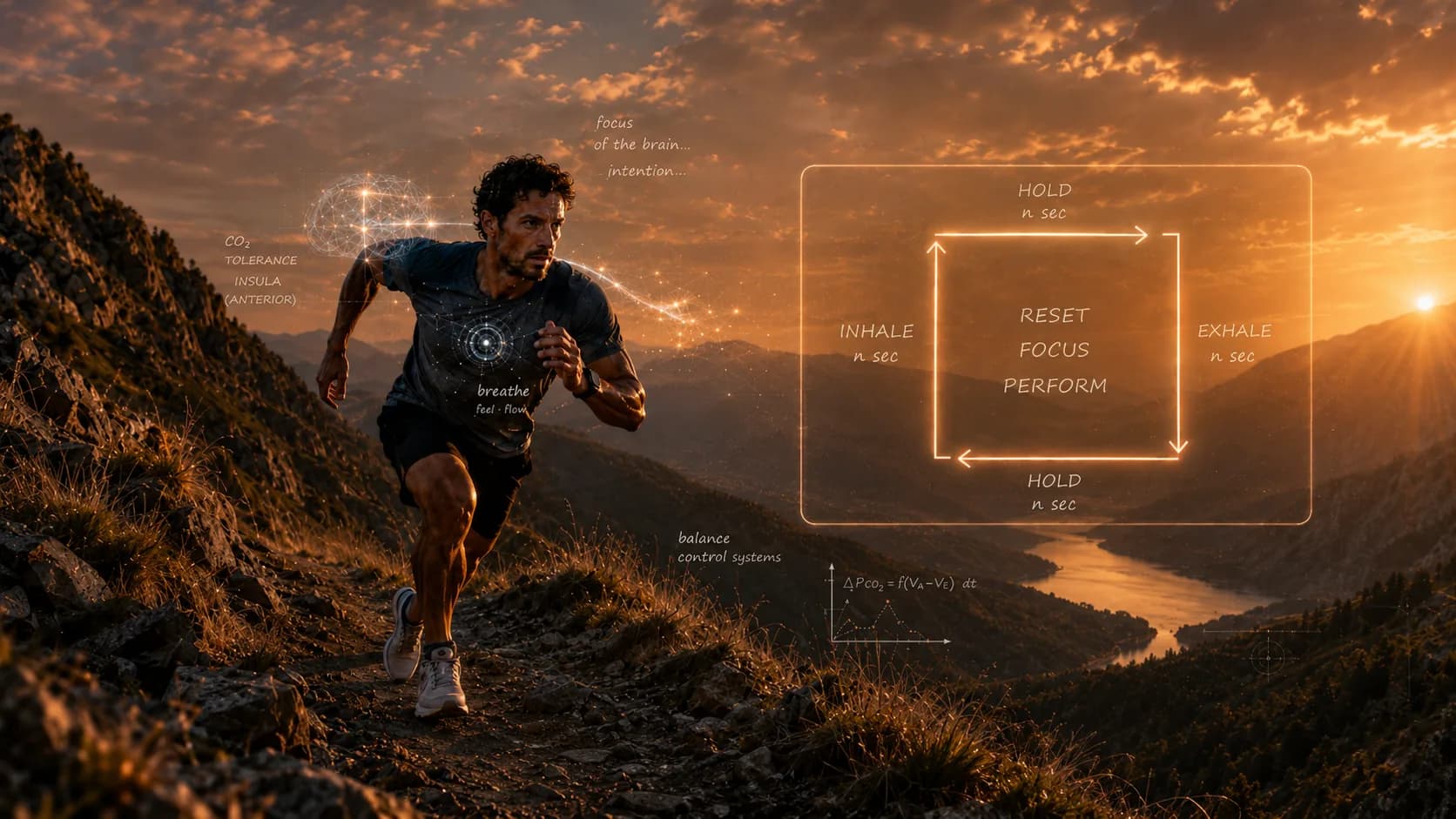
- 1Buteyko practice is built around breathing less, breathing nasally, and tolerating mild air hunger.
- 2BOLT means Body Oxygen Level Test; it is a Buteyko-derived post-exhale hold to first clear urge.
- 3Auralize supports BOLT, but the app’s default baseline is the CO₂ tolerance test.
- 4Separate useful reduced-breathing practice from overbroad cure claims.
What Buteyko is trying to train
Konstantin Buteyko, a Cold War-era Soviet physician, argued that many modern respiratory and anxiety problems trace back to chronic over-breathing. His method — reduce minute ventilation, train nasal breathing, use short comfortable pauses — was designed to raise CO₂ tolerance and normalize breath rhythm.
The core training idea is still useful: if every small rise in CO₂ feels threatening, breathing can become faster, larger, and more reactive than the situation requires. Reduced breathing and small pauses give the nervous system repeated exposure to a mild air-hunger signal. Breathing-dysfunction literature supports taking ventilation habits seriously, even if not every Buteyko claim should be accepted as stated. [1]
Where BOLT fits
BOLT stands for Body Oxygen Level Test. It is a normal-exhale breath hold stopped at the first clear urge to breathe, not at maximum effort. In Buteyko circles it is used as a rough practical signal for breath control and CO₂ tolerance. It is not a direct blood-gas test and should not be treated as a diagnosis.
Auralize keeps BOLT as a supported alternative because some users already know it and because it maps naturally to Buteyko-style reduced-breathing practice. The default app baseline remains the CO₂ tolerance test, which is the measurement Auralize uses to personalize its CO₂ Capacity Builder and box-breathing work.
Why this is not “more oxygen”
Buteyko is often explained through the Bohr effect: CO₂ levels influence how readily hemoglobin releases oxygen to tissues. [2] That does not mean holding the breath magically oxygenates the body. It means CO₂ is part of the oxygen-delivery system and the urge to breathe is a trainable signal. The honest benefit is better control around that signal, not a universal oxygen hack.
How to apply it without the baggage
Use the practices, keep the claims modest. Practice quiet nasal breathing, smaller breaths, and short comfortable pauses. Stop before the pause becomes a fight. Do not use reduced breathing to push through medical symptoms, wheezing, chest pain, or severe breathlessness.
How to apply it in Auralize
Start with Auralize's CO₂ tolerance test if you want the default baseline for box breathing and CO₂ Capacity Builder. Use BOLT when you specifically want Buteyko's original post-exhale, first-urge hold metric. For daily training, the relevant Auralize tools are nasal breathing practice, gentle coherence, and CO₂ Capacity Builder rather than maximal breath holds.