Key takeaways
- 1The vagus nerve carries major parasympathetic pathways between the brainstem and organs.
- 2Cardiac vagal modulation can be estimated from carefully measured HRV, but HRV is not a direct meter of the whole vagus nerve.
- 3Slow breathing changes respiratory sinus arrhythmia immediately; treat that acute HRV increase as practice feedback, then watch longer-term trends separately.
- 4Claims about vagus-nerve treatment, polyvagal states, or disease outcomes need more than an in-session wearable reading.
What the vagus nerve does
The vagus is the tenth cranial nerve. It carries parasympathetic signals involved in cardiac, respiratory, and digestive regulation and carries extensive sensory information from organs back to the brain. It is not one simple relaxation wire, and different branches and organ targets do different jobs.
What “vagal tone” means
Vagal tone is a functional concept rather than a score directly read from the nerve. In cardiac research, respiratory-linked heart-rate changes and HRV metrics can estimate aspects of cardiac vagal modulation under controlled conditions. Age, posture, breathing rate, rhythm, medication, fitness, and heart rhythm all influence the measurement.
Why slow breathing raises HRV
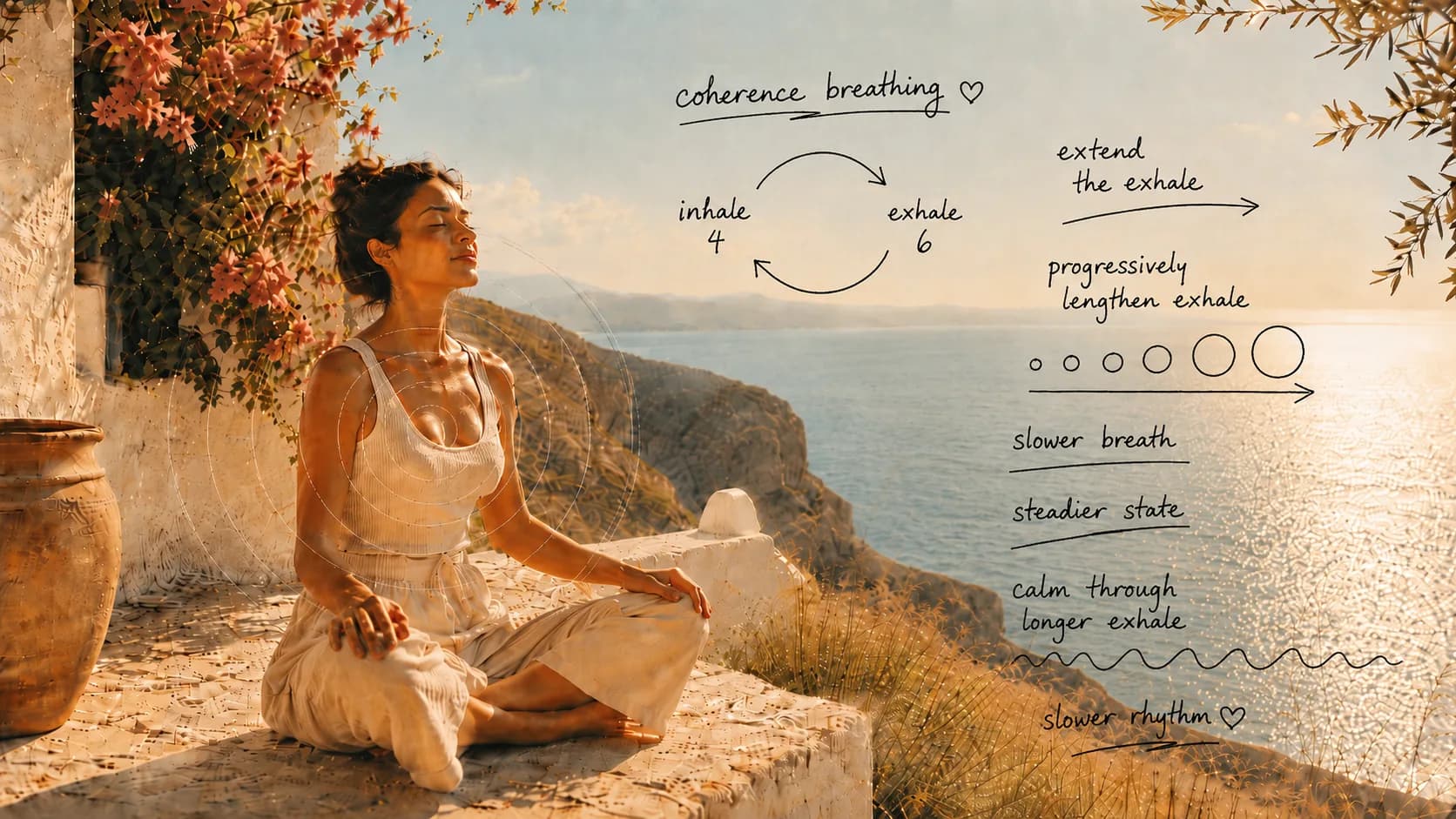
Heart rate normally rises during inhalation and falls during exhalation. Slow breathing can enlarge that respiratory sinus arrhythmia and interact with the baroreflex, creating a high HRV value during the session. This is real vagally mediated physiology, but it is partly produced by the imposed breathing rhythm. It should not be described as a direct before-and-after strength test of the entire vagus nerve.
Can practice change the baseline?
HRV-biofeedback and slow-breathing studies report benefits in some populations and outcomes. Durable changes in resting HRV vary, and no fixed timeline applies to everyone. To test a baseline trend, measure before practice under consistent conditions and review several weeks of data alongside sleep, training, illness, and symptoms.
The polyvagal caveat
Polyvagal theory has influenced trauma-informed language and practice, while important anatomical and evolutionary claims remain debated. A breathing exercise does not need the full theory to have measurable respiratory and cardiac effects. Keep descriptions tied to observed outcomes rather than assigning a precise “ventral” or “dorsal” state from a feeling or wearable score.
Practical use and safety
Comfortable slow breathing can be used as a self-regulation or biofeedback practice. Keep the breath quiet, avoid maximal inhalations, and stop if dizziness or distress develops. Palpitations, fainting, chest pain, or unexplained shortness of breath need medical assessment; they should not be interpreted as a vagal release or a sign to push harder.