Key takeaways
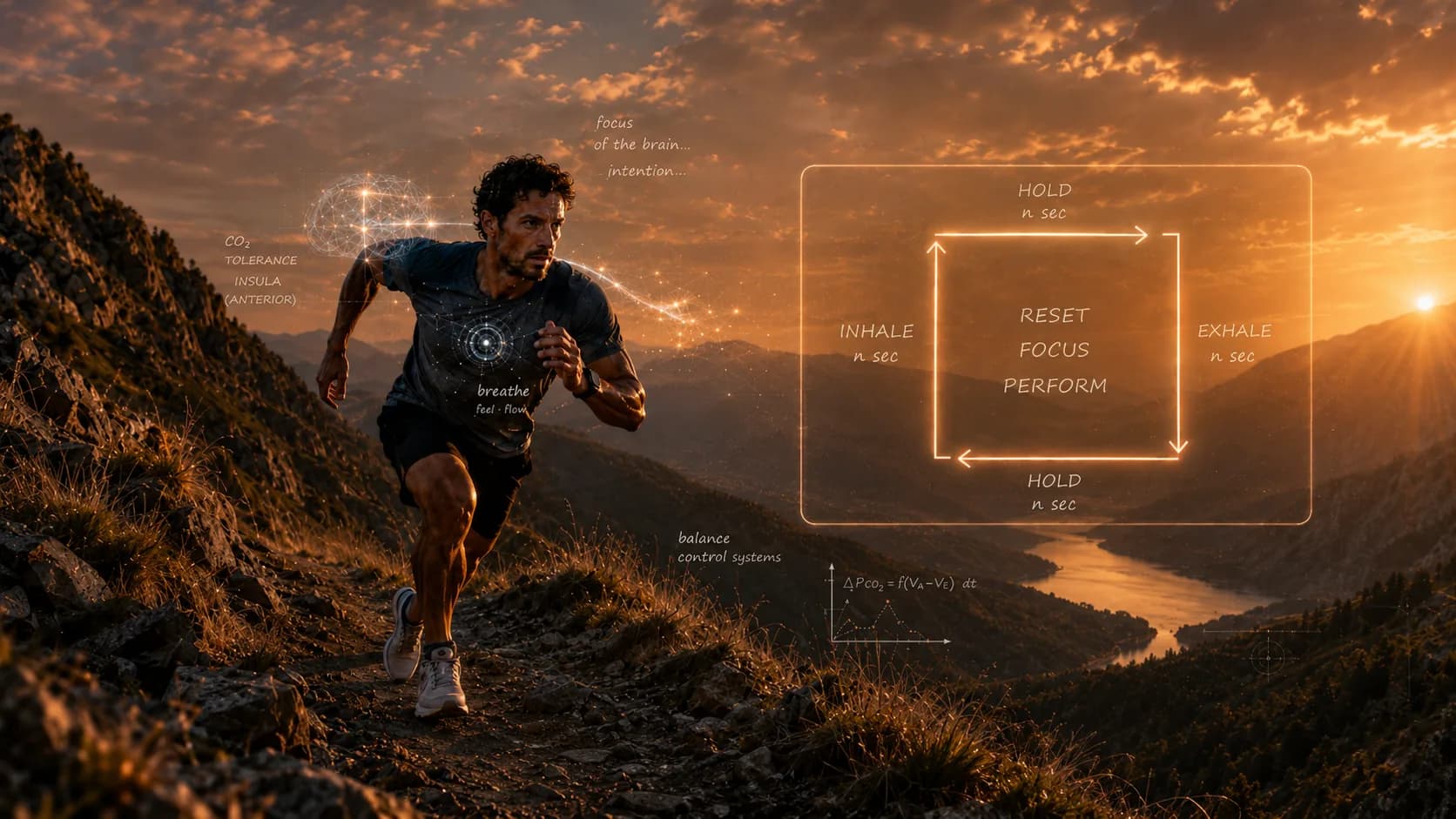
- 1Auralize uses your CO₂ tolerance result to choose a conservative box-breathing interval.
- 2The program is one focused 10-session block because the goal is repeated exposure at a stable, score-matched dose.
- 3Coherence breathing opens and closes each session so the box work stays steady rather than stressful.
- 4Progress advances by completed sessions; the scheduling span is a guide, not the scoring rule.
Why this program exists
CO₂ tolerance training is useful when ordinary pauses, longer exhales, or controlled effort quickly turn into a rushed need to breathe. The Capacity Builder gives that signal a repeatable practice environment: short box-breathing sessions at a level chosen from your baseline instead of from a generic count that may be too easy for one person and too aggressive for another.
The point is not to prove toughness or chase a dramatic breath hold. It is to make the first signs of air hunger feel more familiar, more readable, and easier to pace around. For a regular user, that can mean steadier control during a stressful day. For athletes, it can support the composure needed when breathing pressure rises during hard efforts or recovery between efforts. [1] [5]
Why the progression is shaped this way
This program stays intentionally simple: one 10-session training block. CO₂ tolerance is noisy if the dose changes too much too quickly, so Auralize keeps the core box-breathing interval stable enough for you to notice whether the same work starts feeling calmer over repeated sessions.
The coherence blocks before and after the box work are there for control. They give you a smooth entry and exit so the session does not become a breath-hold contest. The useful adaptation is not “more strain”; it is smoother breathing, cleaner pacing, and less urgency around the same mild CO₂ signal. That is why the program pairs score-matched box breathing with coherence: the box work gives you a repeatable CO₂-tolerance challenge, while the coherence blocks keep the session smooth enough to train control instead of strain. [2]
How Auralize keeps it personalized
Your latest CO₂ tolerance test is used as a pacing input. A lower result keeps the box interval more conservative; a higher result can unlock a longer count. The test is still a product baseline, not a clinical blood-gas measurement, so Auralize treats it as a practical calibration signal rather than a diagnosis. Breath-hold measures can reflect chemosensitivity and tolerance, but they are context dependent. [4]
Completing the block queues a retest so the next run can use your newest baseline. That is why retesting under similar conditions matters: time of day, stress, sleep, familiarity, and how strictly you stop at first clear air hunger can all move the number.
How to use it well
Keep every count smooth and voluntary. If the box interval makes you brace, gasp, or fight the empty-hold side, shorten the effort by stopping and coming back later rather than trying to win the session. The program also fails after 7 inactive days so an old prescription does not sit around as if your baseline and rhythm are still current.