Topic · Stress Relief
Breathing techniques for stress relief
Evidence-based breathing techniques for fast and durable stress relief — from somatic breathing to the physiological sigh and structured box breathing. The science, when to use each, and how.
When stress shows up, your breathing is the fastest way back. Slow exhales lean on the parasympathetic nervous system; specific patterns push that effect further. Somatic breathing adds a body-awareness layer, the physiological sigh gives a fast double-inhale reset, and box breathing supplies a repeatable four-count rhythm for longer pressure.
These are different tools for different moments. Use somatic breathing when you need to reconnect with body signals, a sigh when you need a fast reset in the next thirty seconds, and box breathing when you need a sustainable rhythm to hold during a meeting, before sleep, or under prolonged pressure.
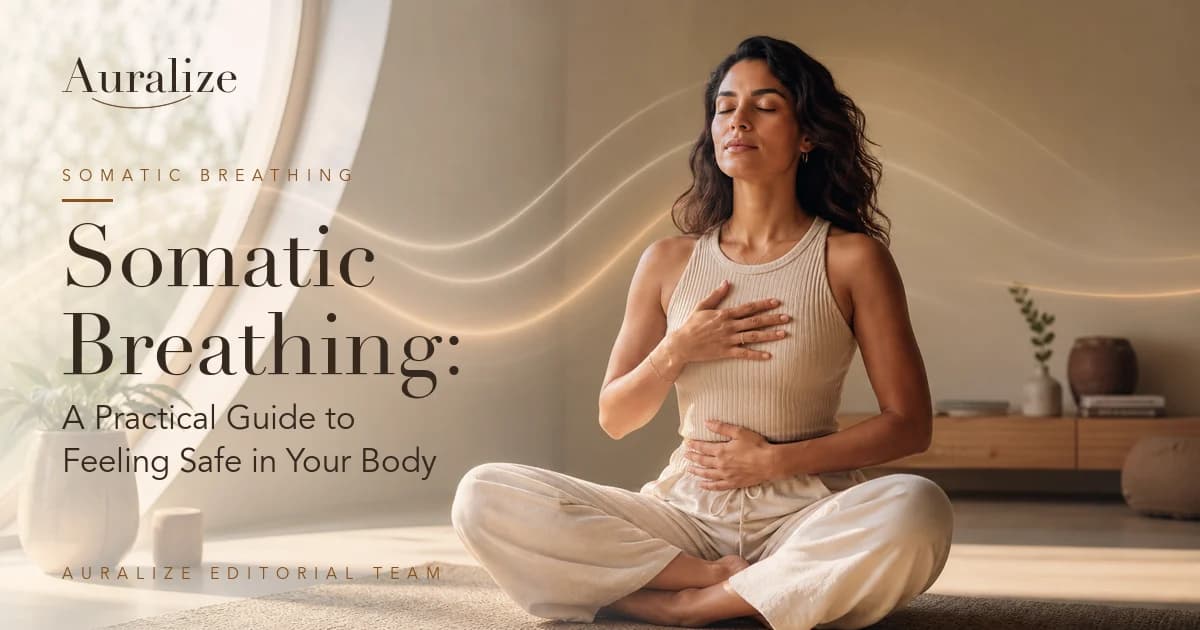
Somatic Breathing: A Practical Guide to Feeling Safe in Your Body
Somatic breathing is breathwork with a body-listening upgrade. Here is what it is, how to practice it safely, and how Auralize Shifts can turn it into a guided state change.

The Physiological Sigh: A Fast Reset for a Stressed Nervous System
A double inhale followed by a long exhale outperforms meditation and box breathing for reducing stress in real time. Here is the science.

Box Breathing: The Science Behind the Navy SEAL Technique
Used in military training, hospital pre-op protocols, and elite sport — box breathing has more peer-reviewed evidence behind it than most breathing techniques. Here's what it does and when it works.